
MANAGED OFFICES
Managed Offices Designed Around Your Business
When a ready-made office is not quite right, compare a dedicated private workspace that can be shaped more closely around layout, branding, connectivity, access and the services your team needs.
THE PRODUCT
What is a Managed Office?
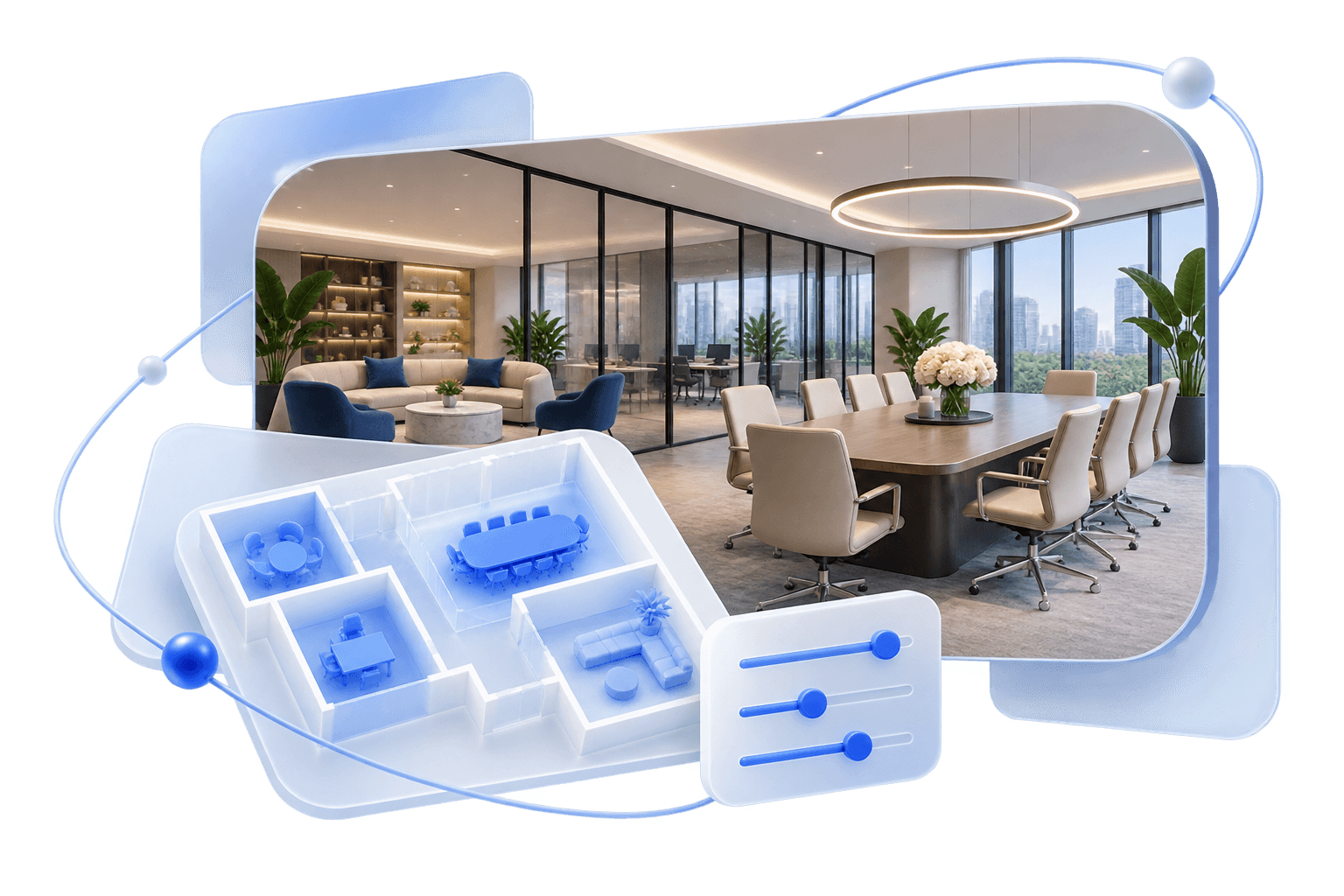
A Managed Office is a private workspace delivered with an agreed level of management and service. It is typically more dedicated and configurable than a standard Serviced Office while outsourcing more setup and day-to-day operations than a conventional lease.
- Some Managed Offices are already fitted and can be adapted; others are sourced, designed or configured around a defined brief.
- The exact service scope and commercial agreement vary by provider, so the product name should never replace review of the actual proposal.
- Serviced Office = primarily ready-to-use convenience. Managed Office = primarily dedicated space, greater control and an outsourced operating model.
- Do not apply a fixed company-size threshold: suitability depends on location, availability, term, specification, service scope and commercial value.
- A large team may prefer a suitable Serviced Office, while a smaller team may justify Managed space for privacy, branding, dedicated facilities or layout.

WHY MANAGED
Why businesses consider Managed Offices
Six reasons a more dedicated, operated workspace can fit a complex brief.
More like your own
Greater influence over layout, furniture, branding and how the private space is organised.
Dedicated facilities
Include private meeting, collaboration, kitchen, reception or other facilities where supported.
Less setup burden
The provider can take on the agreed design, fit-out, furniture, facilities and ongoing operation.
Clearer operations
Property and workplace services can be packaged into an agreed managed solution.
Complex brief
Plan access, technology, privacy, branding, visitor and other operational requirements together.
Middle route
Gain more control than a ready-made serviced space without self-delivering every lease responsibility.
WHEN IT FITS
Match Managed space to the business need
Managed Offices can support different business situations. The common thread is a defined private-workspace brief that benefits from greater control or dedicated facilities.
Support a stable core team and growth
- Use a more defined layout for a growing or established team, including desk neighbourhoods, private rooms and collaboration space.
- A corporate or regional hub can use a dedicated environment for headquarters, a strategic market presence or a long-running project team.
- Furniture packages, project rooms, boardrooms and other work settings can form part of the proposed specification where supported.
- Plan current peak attendance and realistic growth together rather than relying on one universal desks-per-employee assumption.

Shape the visitor and brand experience
- Client-facing requirements may include reception, boardrooms, dedicated client areas and a more controlled arrival experience.
- Brand expression can include signage, finishes, colours or reception presentation where the building and provider permit it.
- Private meeting rooms and front-of-house areas can be planned as part of the occupier’s own space rather than relying only on shared centre facilities.
- Treat branding and visitor experience as a defined requirement for provider confirmation, not an assumed feature of every Managed Office.

Create a permanent base for changing attendance
- A hybrid team can keep a consistent private base even when peak attendance is lower than payroll headcount.
- Plan the right mix of workstations, Meeting Rooms, phone booths, project areas and breakout space around the busiest regular days.
- Relocation or expansion can justify greater control when the current office or a ready-made suite no longer fits the team or operating model.
- Employee facilities such as kitchens, showers, cycle storage or lockers can be included where the building can support them.

Plan technology, access and services together
- Specific requirements can include dedicated connectivity, resilience, cabling, meeting technology, storage, equipment or unusual room configurations.
- Access control, visitor arrangements, internal separation and privacy requirements should be stated explicitly.
- Ongoing services can include cleaning, maintenance, facilities management and other agreed workplace operations.
- Do not assume every building can provide every specification item; the provider should confirm the proposal before commitment.

COMPARE MODELS
Managed, Serviced or conventional lease?
The main difference is not company size. Compare the starting condition, speed, control, operating responsibility and commercial structure that best fit the requirement.
- Serviced Office: existing fitted private space in an operated centre; often faster where a suitable suite already exists; control is usually limited to provider options.
- Managed Office: dedicated space that may be fitted or configured around a brief, with greater influence over layout, branding and private facilities and an outsourced operating layer.
- Conventional lease: the occupier can have extensive property control but may take on more legal, fit-out, technology and direct operating responsibility.
- Agreement structures vary. Do not assume every Managed Office is a licence, every conventional option has the same obligations, or every Serviced Office is universally all-inclusive.

MANAGED BRIEF
Build the requirement before comparing space
Managed Office proposals are shaped by the brief. Give providers enough detail to assess the location, layout, specification, operating scope, cost and realistic delivery programme.
Plan capacity around real use
- Provide current headcount, realistic peak attendance, dedicated-desk needs and expected growth.
- Describe open workstations, private rooms, Meeting Rooms, boardrooms, phone booths, project areas and breakout space.
- For hybrid teams, size the proposal around busy regular days rather than payroll headcount alone.
- Use the sizing guide for detailed capacity planning rather than forcing a universal space-per-person rule.

Define the front-of-house experience
- State reception, signage, client areas, brand expression and other front-of-house requirements.
- Clarify which facilities must be dedicated within the occupier’s space and which could remain shared.
- Include client meeting patterns, boardroom needs and visitor processes that affect the layout.
- Provider and building permissions determine what branding, finishes and alterations can actually be delivered.

Specify technology, access and privacy
- Describe internet, dedicated connectivity, resilience, cabling and Meeting Room technology requirements.
- State building hours, 24-hour access needs, visitor control, confidential work, internal separation and other privacy requirements.
- Include specialist rooms, equipment, unusual power or other technical needs that require explicit confirmation.
- A general listing is not proof of security, regulatory, clinical, laboratory or specialist technical suitability.

Choose the location before the design
- Define preferred areas, acceptable alternatives, transport priorities and client or employee access constraints.
- Compare commute, major rail or metro connections, client access, recruitment, amenities, building quality and total cost.
- Include showers, cycle storage, parking, lockers, kitchen, gym or other facilities that materially affect the team.
- Do not force a postcode when nearby districts can meet the transport and business requirements more effectively.

Compare total cost and delivery programme
- Set budget, preferred term, target move-in date and any requirements that cannot be compromised.
- Normalise the cost basis: core managed fee, VAT, property costs, utilities, fit-out, furniture, technology, services, deposits and setup costs.
- Review how changes, renewal, review, break and exit arrangements are priced and documented in the actual agreement.
- A fitted solution may be available sooner; sourcing, design, fit-out, technology work or approvals can extend the programme. Ask each provider for a realistic schedule.

Example Managed Office requirement:
“We need a private workspace for around 60 people near London Bridge or Southwark. Peak attendance is normally 45-50. We need six meeting rooms, several phone booths, a client-facing reception area, showers, cycle storage, 24-hour access and a dedicated connectivity requirement. We would like to move within six months and expect to stay for several years.”
Provider confirmation note: The provider should confirm the proposed specification, service scope, realistic programme, pricing, responsibilities and commercial agreement for the actual opportunity before the business commits.
Search Managed Offices with one clear brief
Managed Office requirements can be more detailed than a standard filter set. Use the existing Traditional / AI Search component to combine location, people, budget, timing, layout, facilities, connectivity and specialist context, then carry the full requirement into the enquiry for provider review.
How the Managed Office journey works:
- Choose Managed Offices and select at least one location.
- Browse relevant Managed Office opportunities and compare location, capacity, specification and available details.
- Use supported filters directly or describe the wider requirement through AI Search or the enquiry.
- Send the requirement to the relevant workspace provider when an option is worth progressing.
- The provider confirms live availability, proposed specification, realistic timing, pricing and commercial terms.
- Review the actual proposal and visit the space before making a final decision.
Example AI Search:
“We need a self-contained private office for around 45 people in Shoreditch or Old Street. We want four meeting rooms, phone booths, a branded reception area, showers and cycle storage. We need dedicated connectivity and would prefer a 24-36 month commitment.”
Specialist requirements: State any specific security standard, unusual power or equipment provision, laboratory or clinical use, specialist ventilation, enhanced accessibility or other non-standard requirement explicitly. OfficesList can carry the requirement to the provider but should not present a general listing as proof of suitability.
Frequently asked questions
Practical answers to common questions about Managed Office fit, tailoring, pricing, delivery and the OfficesList search journey.
RELATED GUIDANCE
Related OfficesList resources
Use the relevant guide, comparison or workplace Solution when you need deeper product education, cost and sizing guidance, relocation planning or a broader business-outcome journey.
- Managed Offices GuideDetailed education on Managed Offices, tailoring, process and practical evaluation.
- Serviced vs Managed OfficesA deeper comparison of ready-to-use Serviced Offices and more tailored Managed Offices.
- Office Space CostsCompare total occupancy costs and what different workspace models include.
- Compare total occupancy costs and what different workspace models include.Plan capacity around attendance, work settings and expected change.
- Office Relocation GuideBroader planning guidance when the Managed Office requirement forms part of an office move.
- Corporate & EnterpriseWorkspace guidance for larger organisations and complex stakeholder requirements.
- New Office & ExpansionFor opening a new office, regional hub or market-entry workplace.
- Scaling & RightsizingFor requirements driven by changing headcount, attendance or footprint.